From Homer to some of the wildest coastal country in Alaska, a day of bear viewing rarely goes exactly according to plan. That is precisely the point.
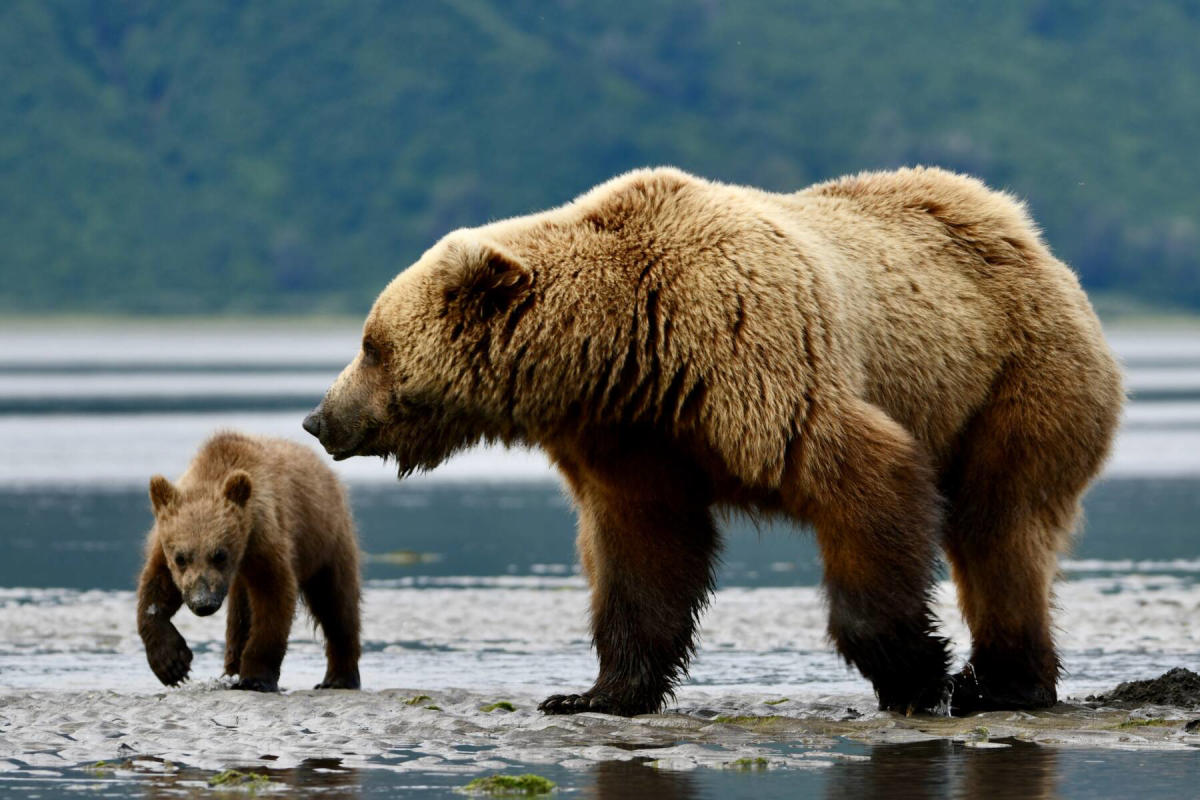
A brown bear and cub in coastal Alaska habitat. Photo courtesy of Alaska Ultimate Safaris.
At seven in the morning, the plan always sounds perfectly reasonable. Pull on your boots. Meet in Homer. Cross Cook Inlet. Find some bears.
Simple.
The bears, unfortunately, have not received the itinerary. Neither has the weather. And the tide certainly has no intention of cooperating with anyone’s vacation schedule.
That is one of the first things you learn about heading into bear country from Homer. You may have a wonderful plan, but Alaska gets a vote. Sometimes it gets several.
A cloud bank may be sitting over the country you hoped to visit. A landing area that worked yesterday may look completely different with today’s tide. Bears that spent one morning grazing in a meadow may have discovered salmon somewhere else by the next.
So you look. And you keep looking. Then a tiny brown dot appears below. “Bear.” Suddenly every face turns toward the window. The day begins.
A bear metropolis on the Cook Inlet coast
Homer has unusual geography. Stand on the shore and look west across Cook Inlet, and you are looking toward a landscape without the network of roads, parking lots, and visitor centers most of us subconsciously expect. There are mountains, glaciers, volcanoes, tidal flats, salmon rivers, and long stretches of wild coastline.
There are also a lot of bears.
Lake Clark National Park and Preserve describes its Cook Inlet coast as something close to a bear metropolis. Rich estuaries place an extraordinary amount of food in one landscape. Park biologists have counted as many as 219 brown bears within a 54 square mile section of coast.
For a brown bear, the Alaska coast is an enormous grocery store. Spring sedges grow in salt marshes. Tidal flats hold clams. Berries appear on the hillsides. Later, rivers fill with salmon. This abundance changes the social life of an animal that is naturally solitary.
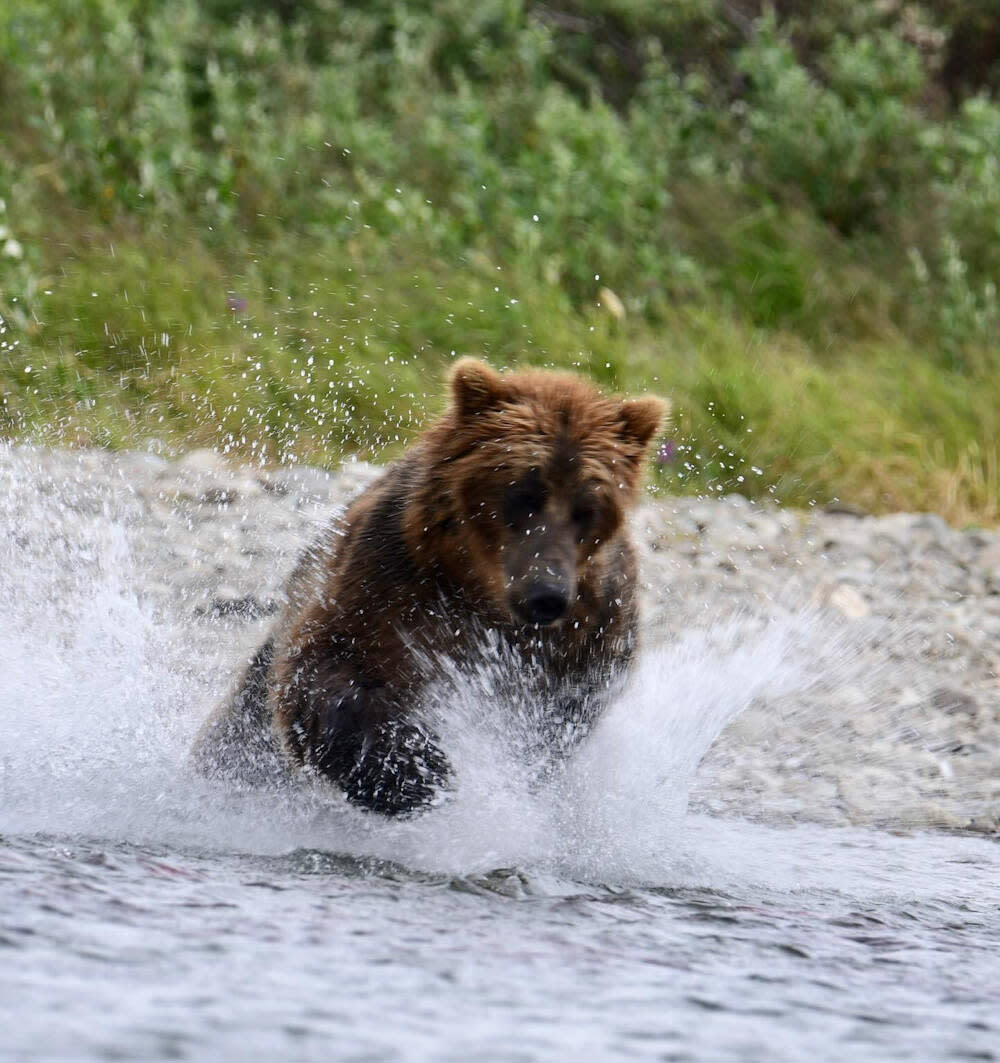
A brown bear moving through coastal water. Photo courtesy of Alaska Ultimate Safaris.
Put enough food in one place and bears have to learn the complicated etiquette of sharing a neighborhood. There are dominant bears. Submissive bears. Mothers watching cubs. Young bears testing boundaries. Older bears that appear to have absolutely no interest in anyone else’s drama. Spend enough time watching and bear country begins to look suspiciously like a small town.
Learning to read the room
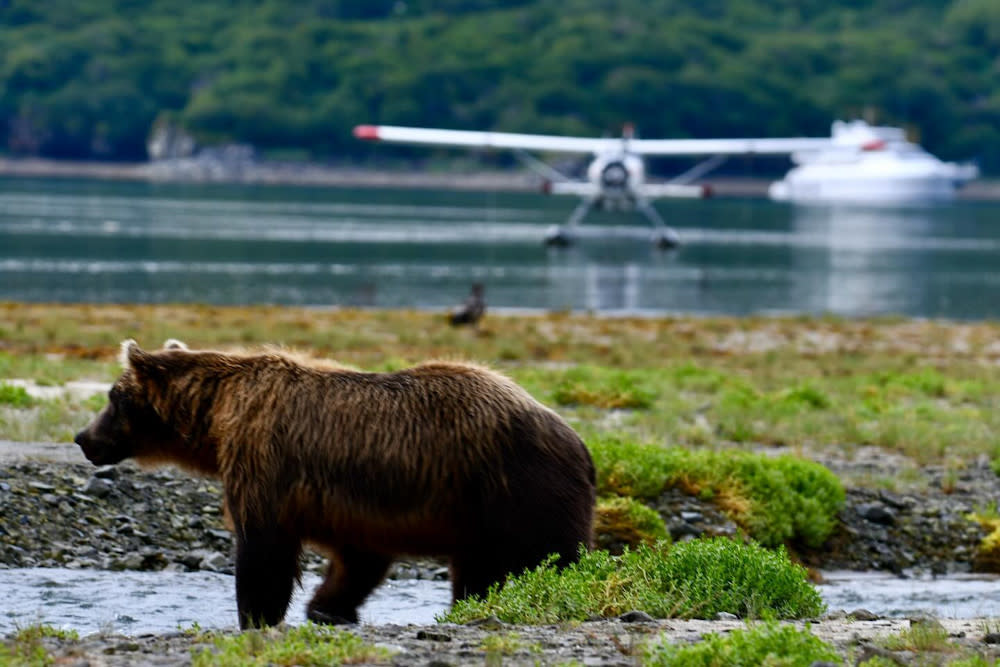
Remote coastal access is selected around current conditions. Photo courtesy of Alaska Ultimate Safaris.
One of the joys of taking people into bear country is watching what happens during the first encounter. A bear lifts its head. Then it stands up. Everyone freezes.
But a bear standing on its hind legs is usually doing something much less dramatic. The National Park Service describes it as an information-gathering posture. The bear is trying to get a better look or smell.
Bear viewing gets more interesting once you stop treating every movement as a prelude to an attack and begin learning the language. A nervous bear may huff. A seriously agitated bear may pop its jaws. If you are close enough to hear jaw popping, the Park Service’s guidance is clear: give that bear more space.
The most important thing you can do is sometimes nothing. Do not chase the bear. Do not crowd it. Do not block where it wants to go. Sit quietly. Pay attention. Let the animal make decisions. Bears have first claim to their fishing holes, clam beds, feeding areas, and travel routes.
The goal is not to manufacture a close encounter. It is to put yourself in the right country, behave appropriately, and let Alaska happen.
Why the cameras eventually come down
By late summer, the priorities in bear country become increasingly obvious. Eat. Then eat some more. Then, if time allows, eat.
The magnificent, round bears celebrated during Katmai’s annual Fat Bear Week did not become that way accidentally. They earned it one salmon at a time. At a productive river, a bear disappears into the water. A fish erupts. Another bear splashes downstream. A gull waits hopefully for scraps. Somewhere on shore, a human with a very expensive camera has completely forgotten about lunch.
Then something shifts. The cameras slowly come down. People simply watch. A mother moves through grass with a cub behind her. A bear catches a salmon with patient focus. Wind moves across a meadow. Water slides over a gravel bar. The experience becomes less about proximity and more about behavior.
Eventually, there is a return to Homer. Boots are muddy. Memory cards are full. Someone has taken hundreds of photos of essentially the same bear. Across the water, the bears continue doing exactly what they were doing before anyone arrived: feeding, resting, moving through the landscape, and ignoring itineraries.
That may be what makes bear viewing from Homer so extraordinary. You do not have to travel to the end of the Earth. Wild Alaska is right across the water.